A Calm Reading Routine for a Developing Story
A calm reading routine for a developing story separates confirmed details from attributed claims and open questions, helping you read with purpose and leave uncertainty visible.

Your phone buzzes while a pot of pasta boils: an agency has announced a change, and a group chat is already arguing about what it means. A calm reading routine for a developing story can help you separate the announcement from interpretations and decide what, if anything, you need to do.
The goal is not to monitor every new post or predict how the story will end. It is to answer a bounded question, keep claims tied to their sources, and stop when further reading is unlikely to change your next decision.
What do I need to know right now?
Start with the practical question in front of you. You may need to know whether a public service is operating, what an agency has decided, or whether a meeting is still scheduled. A focused question creates a natural stopping point.
Separate a decision you must make from general curiosity. If the announcement could affect an appointment, check the responsible agency’s current instructions. If no immediate action depends on the story, a clear report that distinguishes facts from claims may be enough for now.
Try writing one sentence: “Has the agency changed today’s service guidance?” That is easier to answer than “What is really happening?” If you can’t yet answer it, you can name what information is missing rather than opening more tabs at random.
How can I sort claims without overstating them?
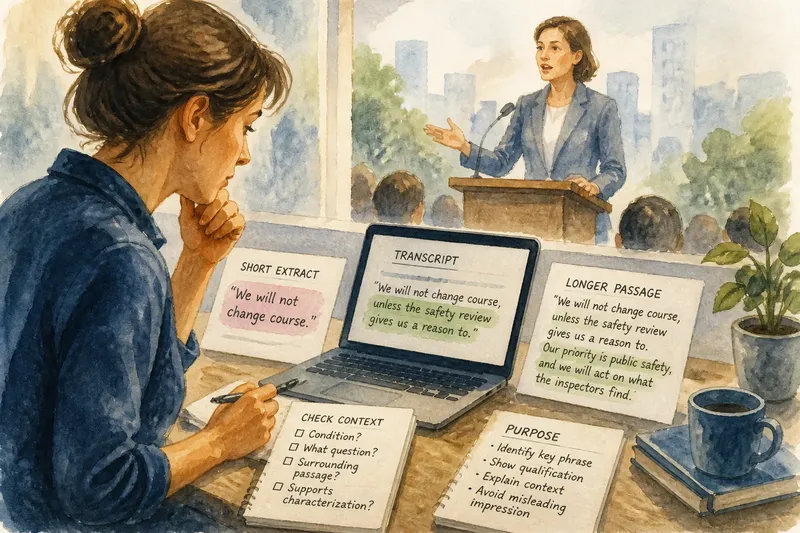
Use three plain labels: established in the account, attributed to a source, and still open. An official notice may establish what the agency announced. A spokesperson’s explanation remains attributed to that spokesperson, while the reason for the decision may remain open if the report offers no supporting record.
These labels describe the evidence available in the account you are reading; they are not permanent verdicts. A claim may later be backed by documents, narrowed, challenged, or corrected. Keep the wording close to the source so memory does not quietly turn an allegation into a fact.
Watch for the difference between a report’s own account and what it quotes. Phrases such as “according to the notice,” “the witness said,” and “the newsroom could not independently confirm” tell you how the information is being presented.
Who can establish which part of the story?
Sources have different vantage points. An agency can confirm what it decided or published; a witness may describe what they saw; an affected resident can explain how a change disrupted daily life. None of those perspectives automatically answers every question about cause, scope, or consequence.
For a claim that matters, note both the source and the basis offered. Is the article citing a public document, a named official, an anonymous source, or an interpretation? If several outlets repeat the same agency statement, that shows the statement is widely reported; it does not by itself provide several independent sources for the underlying claim.
When coverage conflicts, compare what each account actually supports. One story may establish that a decision was announced, while another discusses whether its stated rationale is persuasive. Treat those as different questions rather than forcing them into a single yes-or-no verdict.
How do I make a useful reading note?
A short note can preserve the distinction between what is known and what you still need to check. Use a few lines, not a transcript of every headline. For example:
- What to check: whether the agency has published a written notice. If it has, use the notice to confirm the announced decision; if it has not, keep the announcement attributed to the source reporting it.
- What to check: whether the report names the person making a claim and explains their role. If it does, record the claim with that attribution; if it does not, avoid treating the claim as independently established.
- What to check: whether the account distinguishes a document from a source’s interpretation of it. If it does, keep the document and interpretation separate; if it does not, look for the underlying document before relying on the interpretation.
- What to check: whether the information changes a decision you need to make. If it does, consult the responsible agency’s current guidance; if it does not, leave it as background rather than repeatedly checking for updates.
- What to check: whether an important point remains unanswered. If a specific missing fact could affect your decision, write it as an open question; if it would not change your next action, stop investigating it for now.
- What to check: whether two reports rely on distinct sourcing or repeat the same statement. If they offer separate evidence, compare what each supports; if both cite the same source, record that shared origin instead of counting the repetition as confirmation.
Say you need to know whether a neighborhood meeting is still scheduled after an agency announces a review. You read a local report quoting the announcement, then find the agency’s notice, which says the review is underway but gives no meeting change. You record the review as established by the notice, the meeting status as open, and the agency calendar as the source to check; when the calendar still lists the meeting, you have an answer for your immediate plan, while the reasons for the review remain unresolved.
How can I avoid confusing coverage with confirmation?
A developing story can attract commentary before the underlying record is clear. Separate reporting, analysis, and opinion by asking what each piece contributes: a new document or direct account, an interpretation of known facts, or an argument about what should happen.
Confidence in the writing is not evidence by itself. Look for the stated basis of a consequential claim, and notice when an article uses careful language such as “may,” “according to,” or “has not been confirmed.” Those qualifications are useful information, not defects to be edited out in your memory.
If an account gives a conclusion but not enough context to assess it, keep that limitation visible. You can still learn what a source claims without accepting the claim as settled.
What should I do when a report leaves questions open?
Should I accept the most confident account?
No. Check what evidence and sourcing the account provides, and distinguish its supported details from its interpretation. If the basis is unclear, keep the claim attributed rather than upgrading it to fact.
What if only an official statement is available?
Record what the official statement confirms within the speaker’s role, and leave unsupported explanations open. An agency may confirm its own announcement without settling its wider effects or the reasons behind it.
When should I stop reading for now?
Stop when you have answered the practical question you began with, or when no available information could change your next action. If a particular document or decision could settle an open point, make that the reason for a later visit.
How should I handle an allegation?
Keep the allegation attached to the person or organization making it, and look for any response or supporting material the report includes. If the available account does not resolve it, mark it as contested or open rather than repeating it as established fact.
How do I leave with an honest snapshot?
Before closing the page, write a compact note: what the available account establishes, which claims remain attributed, and what question is still open. Add the source or document that could answer that question, if you know one.
It is not worth following every commentator, saving every post, or reopening the same report when nothing relevant has changed. A calm reading routine for a developing story works best when your note records the limits as clearly as the claims, so your next decision rests on what the account can actually support.